


You will likely have heard about it (or maybe that’s just my bubble?): the Netherlands has a problem with electricity connections. Or rather, not with the connection itself, but with the availability of capacity. The average Dutch person doesn't notice much of this, as power still flows out of the socket without a hitch. But if you are an entrepreneur looking to expand, the first question is often whether you’ve already contacted the grid operator about available capacity. You might find yourself waiting more than five years for power. This is obviously disastrous for entrepreneurs with plans they wish to realise soon. And that is why Netbeheer Nederland’s map is quite red.
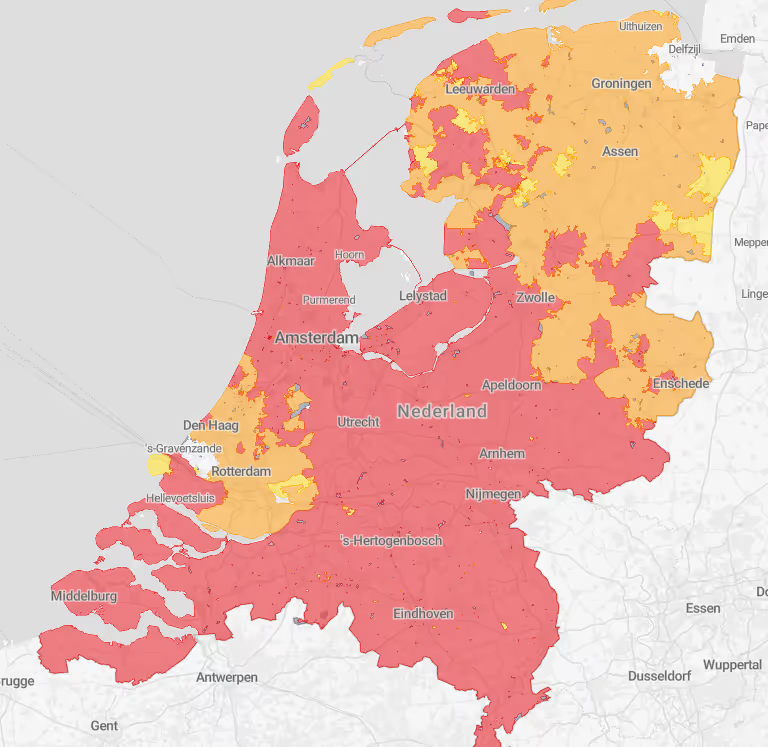
The traditional solution grid operators use to combat congestion issues is laying new cables. However, because this needs to happen across almost the entire country at once and because (personal frustration) no municipality wants a large transformer in its proverbial backyard, this construction process takes a very long time.
But: there are some faster solutions that involve thinking less traditionally.
ACM measures
The party that determines the Grid Code in the Netherlands is the Authority for Consumers and Markets (ACM): a government agency with a rather broad mandate. From ICT in healthcare and postal services to investigations into cartels and legislation regarding energy contracts and grid codes.
Because they have likewise realised that grid congestion is becoming a major problem, they have published an overview of theoretically possible solutions for which they have created, or are going to create, legal room.
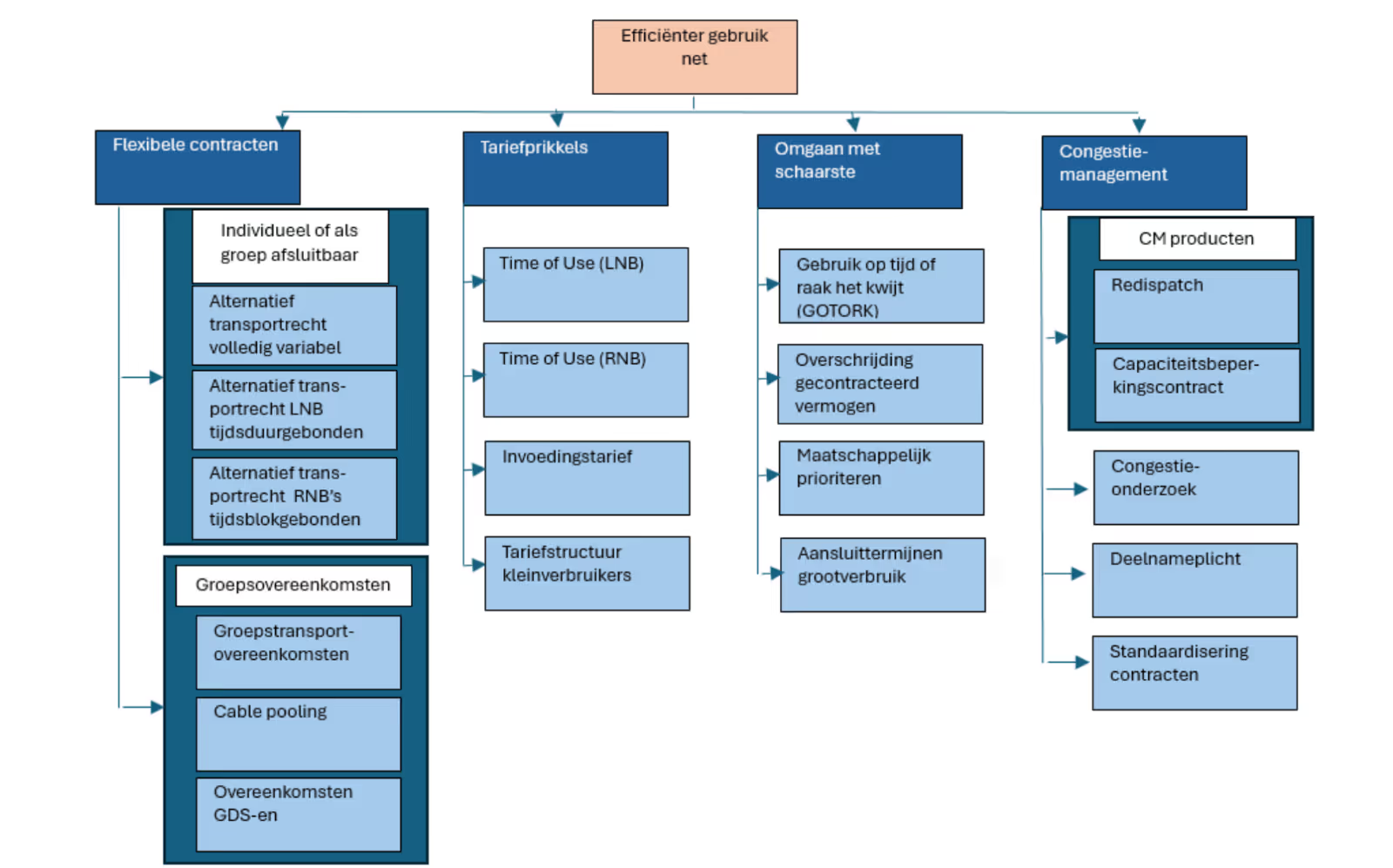
Broadly speaking, the measures can be grouped into: flexible contracts, tariff incentives, managing scarcity and congestion management. The first category is for individual entrepreneurs looking for a solution to their capacity problems. The other options are actually more of a solution for the general interest, which could even turn out unfavourable on an individual level.
The first category of flexible contracts is Alternative transport rights. This boils down to using capacity at times of the day when there is still room on the grid and it comes in a few different flavours. Grid operators have a penchant for using worst-case peak moments as a starting point, even if there is plenty of room on the grid throughout large parts of the day (or night).
The second category is Group agreements. There are more physical versions of this (cable pooling and GDS) and more administrative ones, such as the group-transport agreement. The idea is that you pool your contracted capacities with a group of like-minded parties (minus a simultaneity factor) into a separate entity and work together to reduce the maximum load. Naturally, this requires many data and digital resources and, most likely, a number of familiar technologies such as solar panels, car charging stations, and batteries. And that is just the beginning.
What can we do about this?
The concept of the group-transport agreement has not yet been officially approved by the ACM. However, many parties are already focusing on this. Starting an energy hub together is a hot topic, but it is also a process with a significant number of hurdles. The common denominator in many solutions is that technology, data, and, of course, AI will be used to make more efficient use of what is already there. As it happens, that is our specialty.
On Thursday, May 15, we organised an event to showcase low-code application development and building predictive models in Microsoft Fabric. In this market, with new developments following each other in rapid succession, we believe flexible customisation is a must.

Get in touch with
Auke

